

Bosal


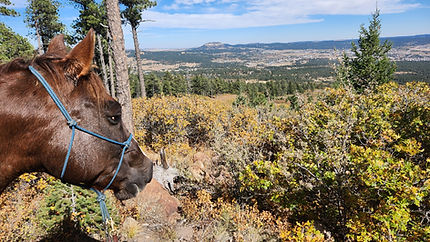


Proper Rope Halter Knot

Glücksrad Hackamor
Germany

Hackamore

Riding Without a Bit
This page explains the advantages of riding without a bit and places bitless riding in the context of trail riding.
Bitless riding refers to riding a horse without a bit in the mouth, using alternative forms of communication and control. In the context of trail riding, bitless riding is not a philosophy or a statement, but a practical option that can offer specific advantages under certain conditions.
The focus is not on replacing one system with another, but on understanding how and why bitless riding can be beneficial.
In the Trail Skills Parcours, we work if possible without a bit. And then we will apply this to our trail riding experience.
What we use:
-
rope halter (Parelli)
-
hackamore
-
bosal
Not as a rule. Not as a belief system. But as a training and awareness tool.
Why do we work without a bit
Riding without a bit requires the rider to:
-
sit balanced
-
communicate clearly
-
regulate speed and direction with the seat, body, and intention
-
release pressure instead of holding it
It removes the option to compensate for imbalance or insecurity with the hand.
That is exactly why it is valuable.
What Riders Learn
Working without a bit helps riders to:
-
ride forward without pulling
-
stop without bracing
-
steer with body position instead of rein strength
-
remain calm when situations change
Riders can learn to overcome their fear of riding without a bit.
Confidence grows from clarity — not from hardware.
If a horse spooks and takes off, it does so with or without a bit in the same way.
A bit does not prevent a runaway.
What makes the difference is skill.
Riders learn how to:
-
stay calm
-
regain control through balance and positioning
-
guide the horse into a circle to safely regain control if it takes off
This is not about strength. It is about understanding, timing, and responsibility.
It also helps not having to remove the bit for grazing or leading down the hill.
Rope halter, hackamore, and bosal —
practical differences
All three options allow bitless riding, but they are not interchangeable.
-
Rope halter
-
ideal for riding and leading
-
simple, lightweight, easy to handle
-
practical for trail situations and groundwork, permits the horse to graze and drink
-
-
Hackamore
-
effective for riding
-
familiar to many riders
-
-
Bosal
-
very clear riding tool
-
excellent feel when used correctly
-
not suitable for leading a horse
-
Because trail riding regularly requires dismounting and leading, this limitation matters.
Safety and progression
Bitless riding is introduced progressively.
-
no horse is forced
-
no rider is pushed
-
exercises are adapted to horse and rider
The goal is not to prove anything.
The goal is to ride with less, because more is no longer
needed.
Not ideology — responsibility
This is not about being “bitless”.
Bits, hackamores, bosals, and rope halters are tools.
None of them replace balance, timing, and responsibility.
Working without a bit simply removes excuses — and reveals where real riding begins.
Always ride the rope halter with a Defined Mechanical Failure Point
Every good system needs a planned point of surrender.
Your reins are no exception.
Rope Halters Must Have a Breakaway Point
This setup deliberately includes a designed mechanical breakaway point—a component intended to fail under abnormal load. Why? Because when things go wrong (and horses being horses, sometimes they do), it’s far better for a small piece of gear to give up than for a horse or rider to get hurt.
To ensure the greatest possible comfort and safety for the horse, we ride with a rope halter combined with loop reins that incorporate a defined breakaway point.
This breakaway system is simple, effective, and proven:
-
It consists of a 4 x 1/2 inch leather strap, folded over and punched with two holes at each end
-
A carabiner is threaded onto the leather strap
-
A zip tie is passed through the holes and twice through the end of the rope.
-
This creates a deliberate weak link that will release under excessive load
The result: a clean, predictable failure point that reduces the risk of serious injury if the horse panics, gets tangled, or pulls back suddenly.
We use loop reins, 150 inches long, made from polyacryl or polypropylene, with two carabiners attached to the reins using leather straps and zip ties. The loop reins cannot be dropped to the ground while riding. For leading, the reins are simply taken over the horse’s head, or—if more length is needed—one side is unclipped while the other end is held.
One Rule, No Exceptions
DO NOT RIDE WITH A ROPE HALTER WITHOUT A BREAKAWAY POINT.
Rope halters are strong. Horses are stronger.
When physics wins, you want the gear to lose—politely, quickly, and without drama.
Think of the breakaway point as a safety valve:
You hope it never activates, but you’ll be very glad it’s there when it does.