


Kursstruktur
Kursstruktur – Dein Weg zum Wanderreiter
Diese Seite beschreibt den Aufbau und Ablauf der Ausbildung an der Wanderreit-Akademie Schweiz.
Die Ausbildung ist modular aufgebaut und verbindet theoretische Vorbereitung mit praktischer Arbeit am und mit dem Pferd.
Trail riding - promotes the partnership between horse and rider like no other discipline.
Trail riding is the most natural thing in the world for a horse....
We riders have to learn from this....
to be with nature and not against it...
Trust is one of the most basic requirements. In freedom, horses trust their lead mare... We as riders are required to take on the role of lead mare. The basics of leadership, trust and knowledge are the basis of what we teach here at the Trail Riding Academy.
And of course everything else too, selection, keeping, feeding, equipment, care, hoof protection, tour planning, bivouacking with horses, first aid, emergency shoeing, behavior in traffic, legal knowledge...
Damit der Wanderritt zum erfolgreichen Erlebnis wird....
Ausbildungsansatz
Die Wanderreit-Akademie geht bewusst einen anderen Weg.
👉 Es wird nicht auf Leihpferden gearbeitet.
👉 Jeder Teilnehmer arbeitet mit seinem eigenen Pferd.
Während du zum Wanderreiter wirst, lernt dein Pferd Schritt für Schritt, ein Wanderreitpferd zu werden.
Für wen die Ausbildung geeignet ist
Die Ausbildung richtet sich an:
-
Personen ab 14 Jahren
-
mit eigenem Pferd
-
die bereit sind, an sich selbst zu arbeiten
-
und gemeinsam mit ihrem Pferd lernen möchten
👉 Die Prüfung ist ab dem 15. Geburtstag möglich.
Ziel der Ausbildung
Ziel ist:
-
ein williges und verlässliches Pferd, das seinem Reiter folgt
-
ein Reiter, der seinem Pferd vertraut
-
ein Team, das sicher und selbstständig im Gelände unterwegs ist
👉 und gemeinsam die Freiheit der Natur erleben kann.
E-Learning – Lernen zu Hause, Praxis im Gelände
Ein zentraler Bestandteil der Ausbildung ist das E-Learning.
👉 Die Theorie wird selbstständig zu Hause erarbeitet.
👉 Die Praxis findet im Gelände statt.
Das ermöglicht es, die gemeinsamen Termine fast vollständig für die praktische Arbeit zu nutzen.
Ablauf des Online-Kurses
-
pro Kurseinheit erhältst du 25 Fragen zu einem bestimmten Thema
-
die Fragen werden selbstständig bearbeitet
-
durch eigene Überlegungen
-
durch Austausch mit anderen Teilnehmern
-
durch Recherche (z. B. Literatur oder Internet)
-
-
die Antworten werden bis zum festgelegten Termin per E-Mail eingesendet
-
der Kursleiter korrigiert und gibt Rückmeldung
-
bei Fragen kann jederzeit Kontakt aufgenommen werden
Praxiskurse am Wochenende
Zu jedem Kurselement gehört ein Praxistermin mit Pferd.
Dabei:
-
treffen wir uns am jeweiligen Kursort
-
setzen die Theorie im Gelände um
-
tauschen Erfahrungen aus
-
beurteilen Fortschritte
-
geben gezielte Hilfestellung
👉 Der Fokus liegt auf:
-
Vertrauen
-
Übersicht
-
Verantwortung
Teilnahme an Tagesritten
An Tagesritten kann teilnehmen, wer einen Kursblock abgeschlossen hat.
Mit jedem weiteren Kurselement erhältst du:
-
die ausgearbeiteten Inhalte
-
neue Fragen für den nächsten Ausbildungsschritt
Kommunikation
Die gesamte Kommunikation erfolgt per E-Mail.
👉 So bleibt der Austausch klar, nachvollziehbar und für alle Beteiligten übersichtlich.
Der entscheidende Punkt
Die Ausbildung ist kein theoretisches Konzept.
👉 Sie verbindet Wissen und Praxis.
👉 Ziel ist nicht, nur Inhalte zu kennen –
👉 sondern sie im Gelände anwenden zu können.

Basic course 3 X 2 days theory and practice 200-
plus 3 x 240.
Basic course 3 X 2 days theory and practice 200-
plus 3 x 240.
Basic course 3 X 2 days theory and practice 200-
plus 3 x 240.

Supplementary Course Emergency Fitting and First Aid
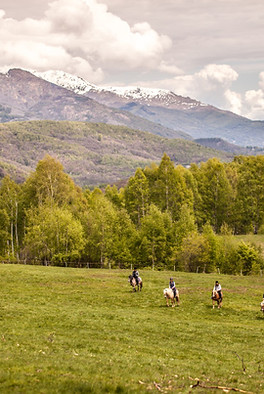
test ride 2 days

cross-country riding guide
2 x 2 days
Preparation Basic Course
You have learned at home what qualities you and your horse need to develop in order to have fun on the trail.
1st weekend practical course Schleitheim
You bring your horse with you to the course.
We revise the answers to the questionnaire together and explain where necessary.
We work on the projects you mentioned with your horses and go riding.
Preparation 2
You have learned online how to feed and train your horse, what to look out for when you are out and about, how and what equipment you need, how to move safely in traffic, how to plan rides and how to orient yourself in the terrain. How to behave in a thunderstorm and how to recognize and avoid poisonous plants.
2nd weekend practical course Schleitheim
You bring your horse and your existing equipment including map/GPS to the course. Again, we answer questions and work on navigation using maps and GPS. We discuss the necessary equipment for trail rides and saddle up. We are now safe in the countryside and our horses walk along relaxed in the group. We build a paddock outside and tie our horses to the high rope. We know the traffic rules and how to safely cross roads and railway lines. We lead a small group in the countryside using a map.
Test rides for cross-country riders / trail riders
After the two weekends, we will meet on the third weekend for the 2-day test ride in Schleitheim. On the test ride, we will test what we have learned without too much stress and in practice. You will ride according to the map and lead a small group. If you are not yet that advanced with your map knowledge , then This will not be assessed and you will receive the cross-country rider diploma. If your map knowledge is such that you can lead a group in unfamiliar terrain without any problems, this will be tested and you will receive the trail rider diploma. You can take the trail rider exam later, when your map knowledge is up to scratch.
supplementary course
We meet with the First Aid Academy team on a weekend without horses. We practice first aid for humans in practical situations and what wound treatment is possible for horses. A hoof trimmer and blacksmith shows us how to remove shoes, how to bend them back into shape and how to nail them back on. We also learn what barefoot care means and how to use the emergency shoeing tool.
cross-country riding guide
After passing the trail riding test, it is important to gain experience as a trail rider.
Documents Rittführer online
You will receive online materials to work through at home, the content of which will form part of the exam paper.
1st weekend course
Topics of the trail riding exam are briefly refreshed. Group dynamic processes and conflict resolution strategies are discussed. Communication with the horse and the human
2nd weekend test ride
To be admitted to the exam, the following conditions must be met.
Minimum age 20 years on the day of the exam.
Trail riding certificate at least 12 months
Completed first aid course Not older than 2 years.
CV and application documents
20 days of trail riding with at least 3 participants
Of these, at least 4 days of trail riding with a recognized trail riding guide.
For the exam, you prepare a 2-day ride in an area you know, with announcement and organization (route and accommodation) for at least 6 participants (including 2 examiners) and lead this ride accompanied by the examiners. A maximum of 3 candidates can organize a ride each, one of which will be carried out at the examiners' discretion. The three candidates will then take turns leading this ride. The two examiners assess the ride leadership and the documents provided for the planned rides. You will receive the Cross-Country Ride Leader / Trail Ride Leader diploma from the Swiss Trail Riding Academy.